You’re checking your phone in the morning and see a message from a coworker:
WFH today.
For a second, you pause. Is that slang? Is it casual? Is it something important?
If you’ve ever wondered what it means you’re not alone.
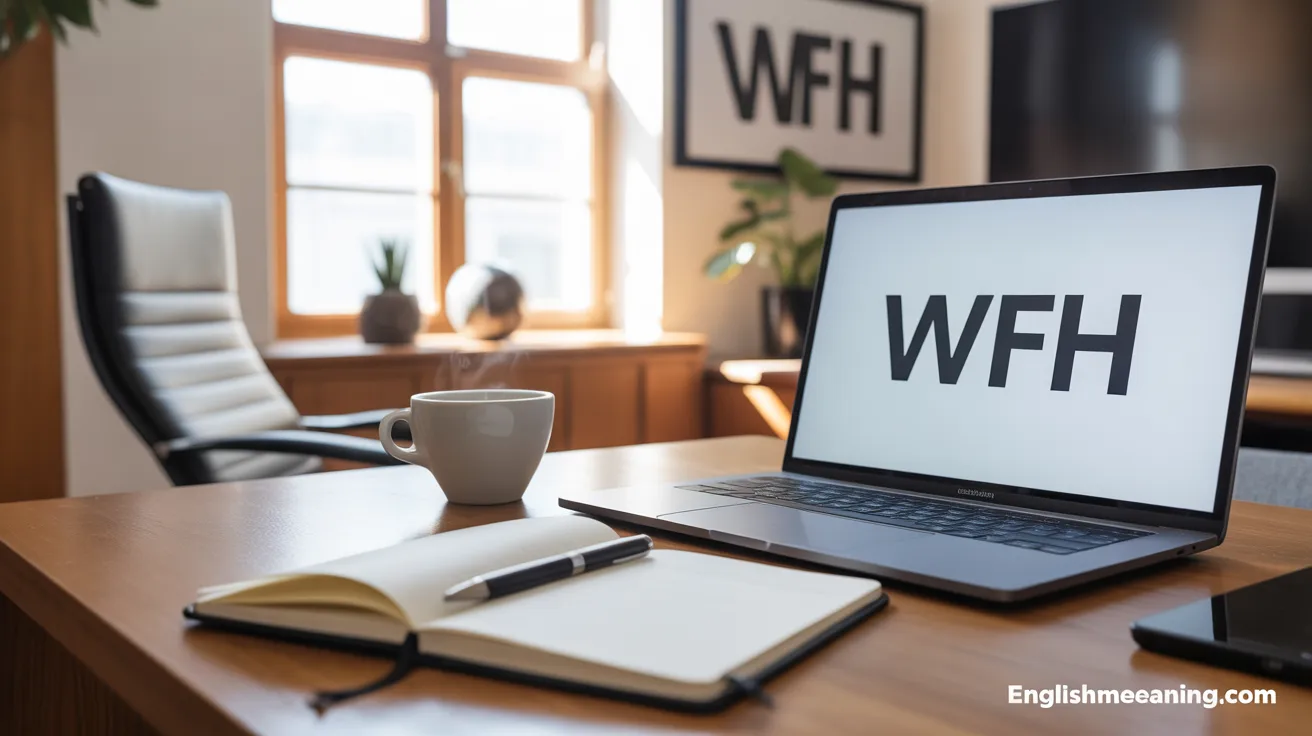
The meaning of WFH is Work From Home. It simply means someone is working remotely instead of going to the office. It’s professional, commonly used in workplace chats, and completely normal in modern office communication.
Now let’s break it down properly with examples and when to use it.
🧠 What Is the Meaning of WFH?
WFH stands for Work From Home.
It refers to a work arrangement where an employee performs their job duties from home instead of being physically present in the office.
For example:
I’ll be WFH tomorrow due to a delivery at home.
That means the person is still working just remotely.
Since the COVID-19 pandemic and global lockdowns, WFH has become part of everyday professional language. Companies shifted toward remote work, telecommuting, and even long-term hybrid work models, where employees split time between home and office.
In short: WFH = Work From Home = Working remotely instead of going to the office.
📱 Where Is WFH Commonly Used?
WFH isn’t romantic slang or casual texting language. It’s workplace shorthand.
You’ll most often see it in:
- 💼 Slack or Microsoft Teams messages
- 📧 Internal work emails
- 🗓️ Calendar notes
- 📱 WhatsApp office groups
- 🔗 LinkedIn posts
- 🧑💻 Project management tools
It’s considered:
- ✔️ Professional
- ✔️ Office-friendly
- ✔️ Clear and efficient
- ❌ Not flirty or emotional
In most companies today, saying WFH today is completely normal and widely understood.
💬 Examples of WFH in Conversation
Here are real-world examples of how WFH is used naturally:
Example 1
A: Are you coming in today?
B: no, WFH today 🙂
Example 2
A: Can we reschedule the meeting?
B: I’m WFH but free after 2 pm.
Example 3
A: Where are you?
B: traffic was bad so I decided to go to WFH.
Example 4
A: Are you available on Teams?
B: Yes, WFH all week.
Example 5
A: lunch plan?
B: Can’t, I’m WFH today.
Notice something? It’s short, practical, and saves time. That’s why people use it.
🕓 When to Use and When Not to Use WFH
Even though WFH is common, context still matters.
✅ When to Use WFH
- In team chats
- In Slack status updates
- In internal emails
- When informing your manager
- In LinkedIn posts about remote work
❌ When Not to Use WFH
- In formal job contracts
- In legal documents
- In official HR policy documents
- When speaking to someone unfamiliar with corporate terms
Here’s a quick comparison:
| Context | Example Phrase | Why It Works |
| Friend at work | WFH today 😄 | Casual but clear |
| Team chat | WFH, reachable on Slack. | Professional & direct |
| Formal email | I will be working from home today. | Polite & complete |
| Legal document | The employee shall perform remote duties. | Official tone required |
🔄 WFH vs Remote Work – Is There a Difference?
Many people confuse these terms.
- WFH (Work From Home) means working specifically from your home.
- Remote work means working from anywhere home, café, another city, or even another country.
- Hybrid work means splitting time between office and home.
So while WFH is a type of remote work, not all remote work is WFH.
💻 Why WFH Became So Popular
The term exploded during the COVID-19 pandemic. Businesses worldwide had to adapt quickly.
This led to:
- Heavy use of Zoom, Microsoft Teams, Slack, and Google Meet
- Growth in cloud computing
- Increased use of VPN connections
- Rise of the distributed workforce
- Greater focus on work-life balance
Today, many companies still offer flexible work arrangements. In fact, hybrid work models have become a long-term strategy for many organizations.
WFH is no longer temporary; it’s part of modern corporate culture.
⚖️ Is WFH Formal or Casual?
WFH sits in the middle.
It’s:
- Professional enough for workplace use
- Casual enough for quick messages
- Not suitable for romantic or personal chats
You wouldn’t text your partner WFH babe.
But you would tell your manager, WFH today.
It’s a simple workplace language.
🌍 How WFH Changed Work Culture
WFH reshaped how companies operate.
Benefits often include:
- No daily commute
- Flexible schedules
- Better time management
- Comfortable home office setups
Challenges can include:
- Home distractions
- Isolation
- Blurred work-life boundaries
Because of this shift, HR policies and employment contracts have evolved to support flexible arrangements.
🔄 Similar Terms Related to WFH
Here are other commonly used workplace acronyms:
| Term | Meaning | When to Use |
| WFO | Work From Office | When physically present |
| OOO | Out Of Office | When unavailable |
| Hybrid Work | Office + Home mix | Corporate strategy discussions |
| Telecommuting | Remote work via technology | Formal HR context |
| Digital Nomad | Remote worker who travels | Lifestyle conversations |
Knowing these helps you better understand modern workplace communication.
❓ FAQs
What does WFH mean in text?
WFH means Work From Home. It indicates someone is working remotely instead of going to the office.
Is WFH professional?
Yes. It’s widely accepted in corporate chats and internal emails.
Can I use WFH in an email?
Yes, especially in internal communication. For formal emails, you may write the full phrase working from home.
Is WFH the same as hybrid work?
No. Hybrid work combines office and home work. WFH means working from home specifically.
Did WFH start because of COVID?
It became extremely popular during COVID-19, though remote work existed before.
Final Thoughts
WFH meaning is simple: Work From Home. But the impact behind those three letters is huge.
It represents a shift in how the world works from traditional office buildings to digital collaboration, virtual meetings, and flexible employment models.
So next time someone says, WFH today, you’ll know exactly what they mean they’re working, just not commuting.
Clear. Modern. Professional.
I’m Daniel Reed, helping readers decode social media slang, Instagram trends, and online actions. Learn the meaning behind emojis, abbreviations, and internet lingo at EnglishMeeaning.com.